Inside the Mallory-Neely House: A Memphis Portrait in Velvet and Light
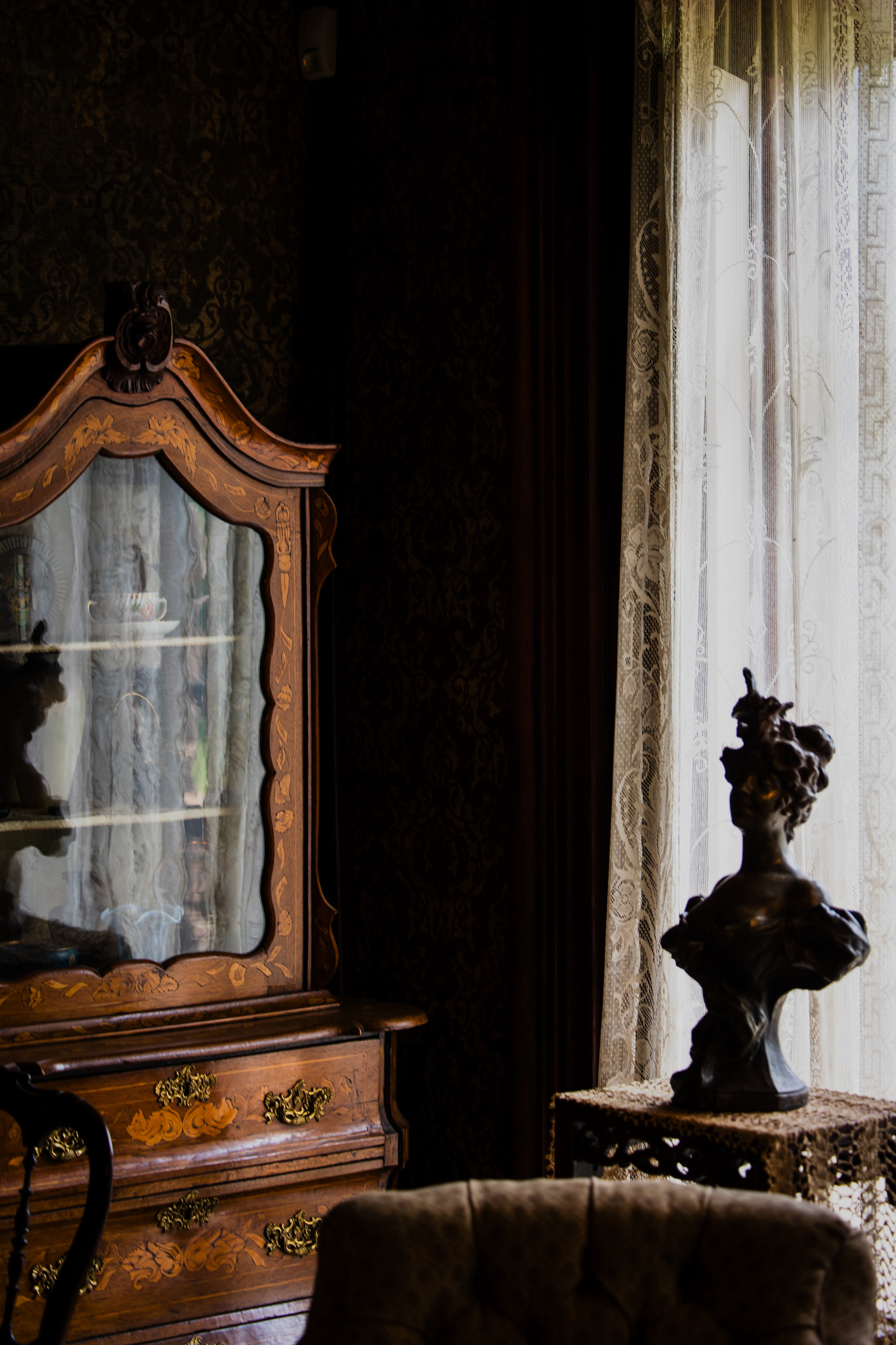
There’s a particular kind of quiet inside the Mallory-Neely House, the kind that has nothing to do with an empty room and everything to do with age. Built in 1852 and expanded in the 1890s into the twenty-five-room Italianate villa that still stands at the corner of Adams Avenue in Memphis’ Victorian Village, the house is one of the last in the city to hold onto almost all of its original furnishings. Same velvet. Same crystal. Same gilt catching the same window light it caught a hundred and thirty years ago. It’s operated today as a museum by the Museum of Science & History, which means the rooms are preserved, not staged — nothing arranged for a camera, nothing repositioned for a shot.
That distinction shaped every frame I made there. Shooting inside a working museum is a different discipline than shooting inside a styled interior or a client’s home. You don’t get to move the furniture. You don’t get to clear a side table because a lamp cord is in your sightline. You work with what four generations of one family left behind, in the light the architecture gives you, and you find the picture inside those limits instead of imposing one on top of them. Here’s what that looked like, room by room.
Composing Around What You Can’t Move
Every tabletop in this house is its own still life, and none of them were built with a lens in mind. A round table by a window carries a lamp, a bronze inkwell, a stack of cut-crystal dishes, and a leather-bound guest book — four objects, four different heights, four different reflective surfaces, none of them mine to rearrange. The job isn’t to simplify the vignette. It’s to find the angle where the clutter reads as history instead of noise, where the eye has a place to land and a place to travel.
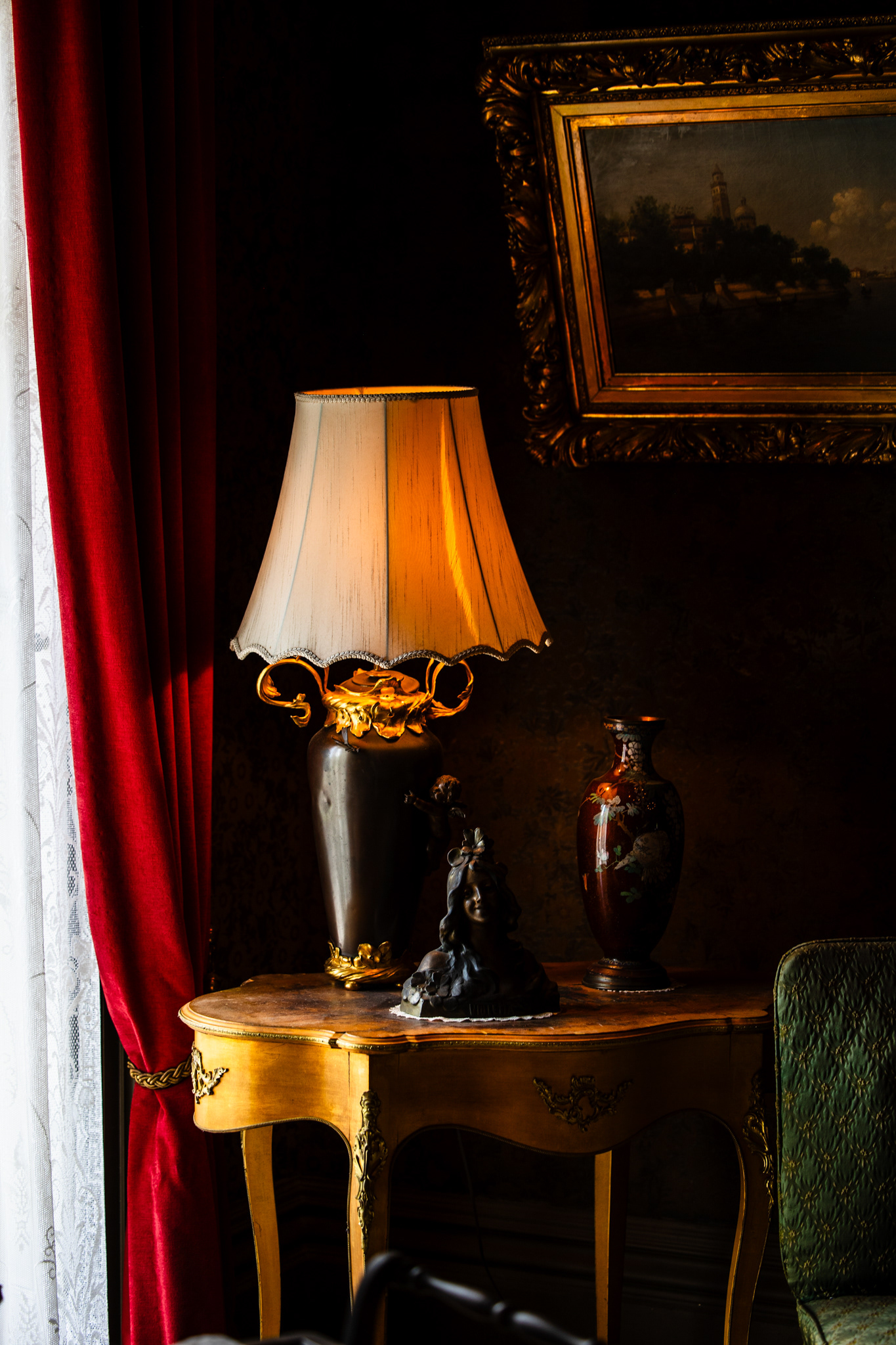
That meant working the same corner from multiple positions — wide enough to hold the red velvet drape and the window behind it, then tight enough to isolate the crystal catching the light on its own. Neither shot replaces the other. The wide frame tells you where you are. The tight one tells you what it felt like to stand there.
Working Entirely in Available Window Light
How do you create a connection so strong that your brand is recognizable without a logo?
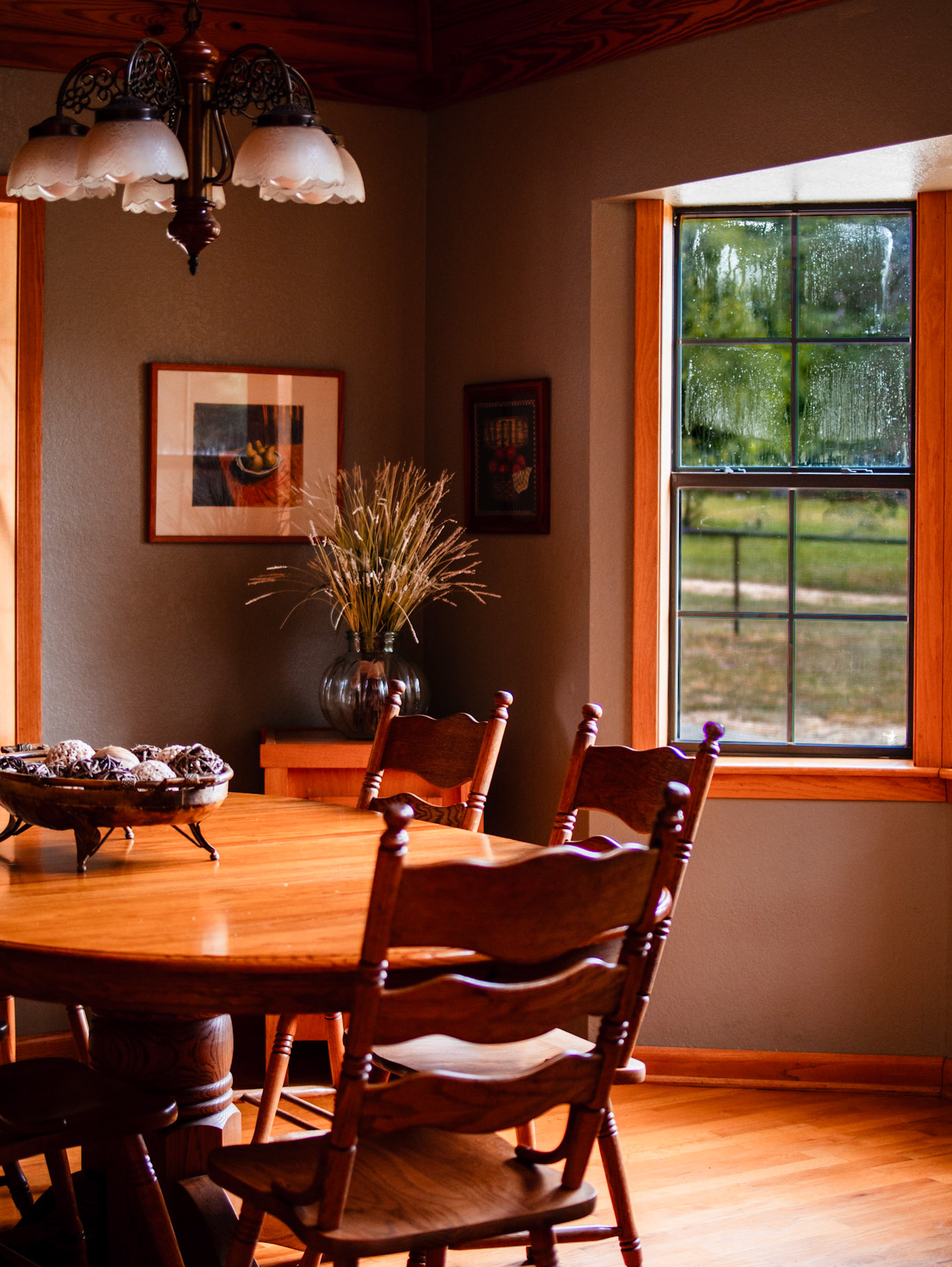
No strobes, no reflectors, no bounce cards propped against a doorframe — a working museum doesn’t leave room for a lighting setup, and honestly, the house doesn’t need one. Memphis light through heavy drapery does something artificial light can’t fake: it turns a lamp shade the color 1 of tea and lets a velvet curtain hold three different shades of red depending on how deep the fold falls into shadow.
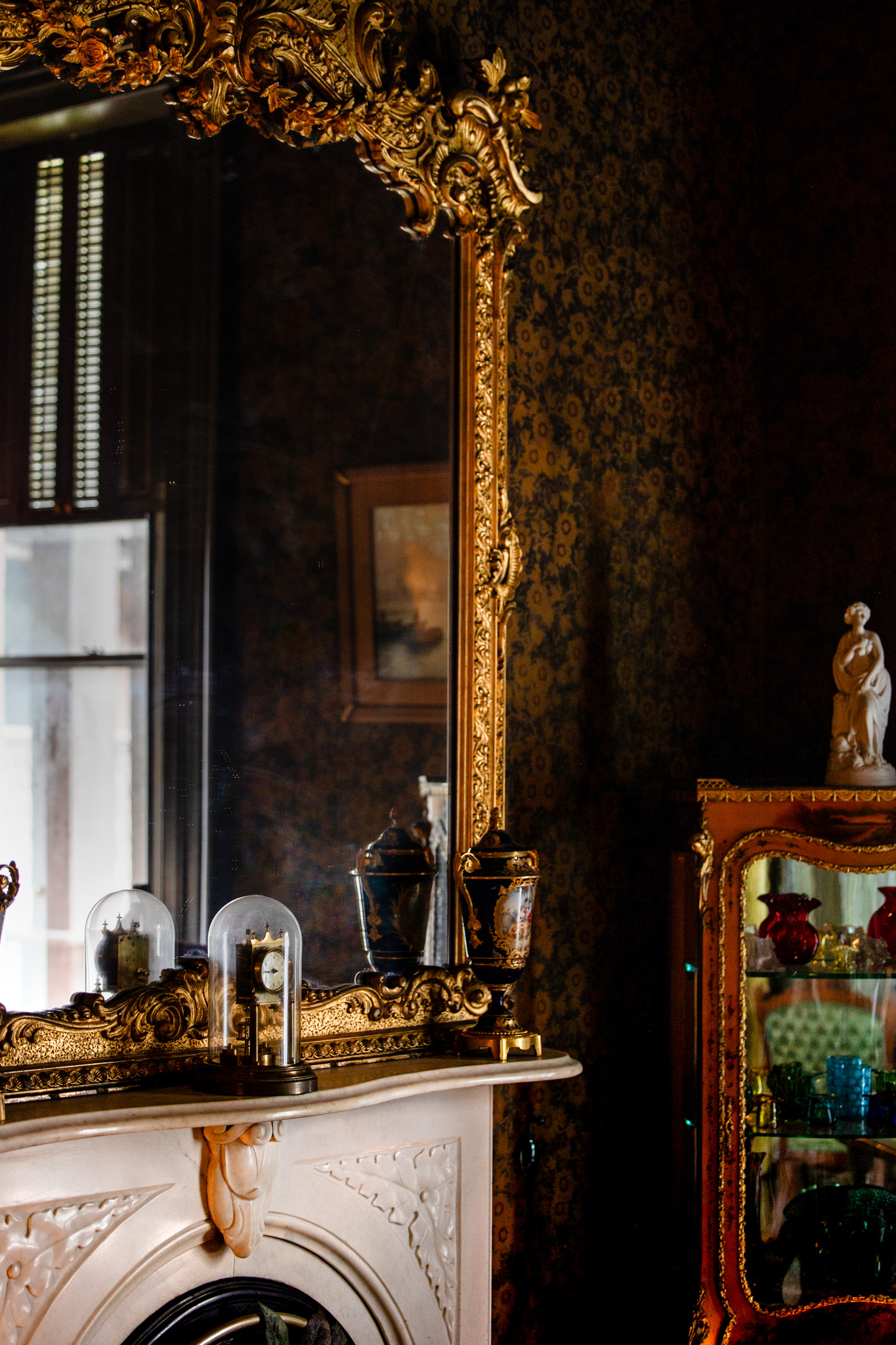
The tradeoff is patience. A lot of these rooms only get good light for a narrow window in the middle of the day, filtered through lace sheers or blocked by porch columns outside. I spent more time waiting than shooting — watching a shaft of light travel across a marble mantel, checking it against a gilded mirror across the room, deciding whether the shot needed the lamp lit or the lamp dark. It’s the same patience I’d bring to a blind at first light, just indoors, with dust motes instead of duck wings.
Shooting Glass and Mirrors Without Ending Up in the Frame
This house tests you on reflective surfaces more than any interior I’ve worked in — gilt-framed mirrors over nearly every mantel, an armoire mirror tall enough to hold an entire bedroom, cut crystal on every table, a curio cabinet stacked with colored glass. Any one of those will put a photographer, a tripod, or a flash straight into the shot if you’re not paying attention to where you’re standing before you even lift the camera.
The solution is almost always an angle problem, not a gear problem. Shooting past the mirror rather than square into it, letting it hold a soft reflection of the window or the room beyond rather than a clean one of me. The armoire mirror in the green bedroom, reflecting a brass fan and a curtained window from across the room, is one of my favorite frames from the day precisely because it does the work of showing you a second room without ever showing you the photographer standing in the first one.
Balancing the Wide Shot Against the Quiet Detail
The exterior alone could carry a whole shoot — the corner tower, the arched brick porticos, the stonework catching afternoon light through magnolia branches. It’s the kind of architecture that rewards standing back and letting the structure do the composing for you: strong verticals, a slate roof cutting a clean line against the sky, the kind of formal symmetry Italianate villas were built for.
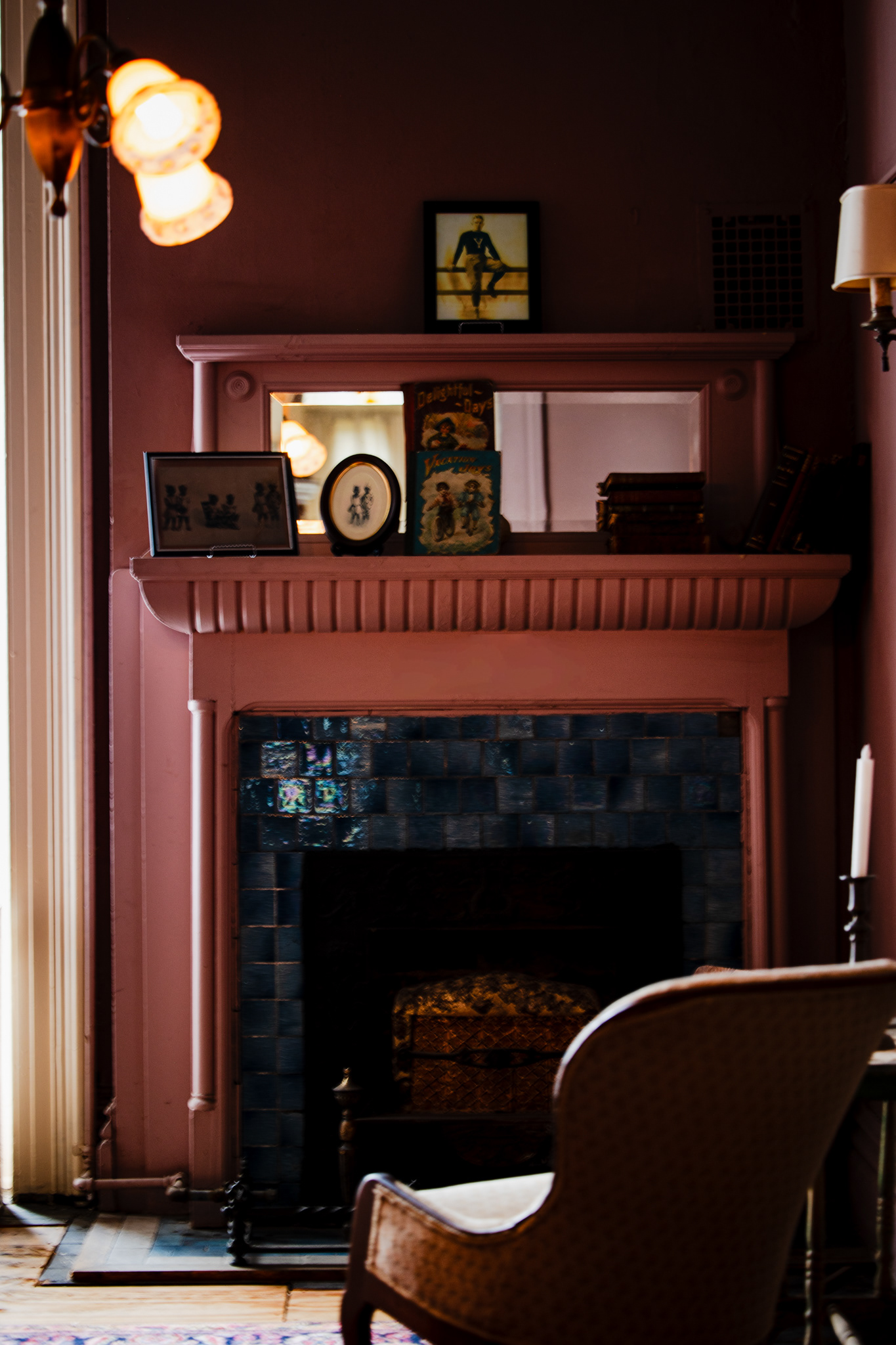
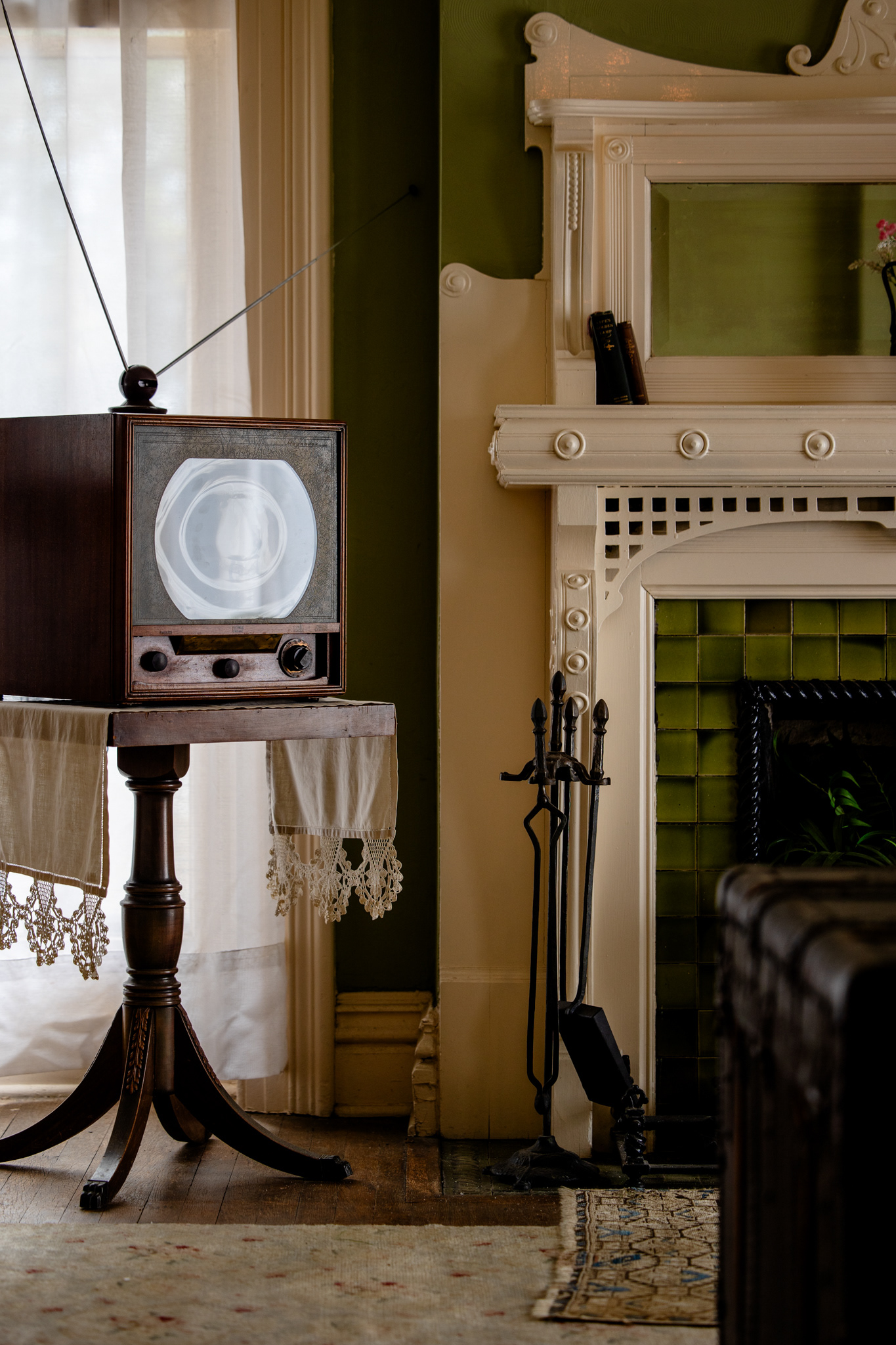
But the house’s real character lives in the smaller, stranger details nobody stages for a museum brochure — a boxy television with a round screen and a rabbit-ear antenna, still sitting on its stand with a lace runner underneath. A rotary phone and a brass desk fan sharing a nightstand like they never stopped being useful. A tiled fireplace surround gone green with age under a fresh vase of pink flowers. Those are the frames that make a house feel lived in rather than preserved. A full shoot needs both registers — the wide shot that establishes where you are, and the tight one that tells you who was actually here.